Tips For Removing Kool Aid Stains
Removing Kool Aid stains can be hard to do unless you act quickly.
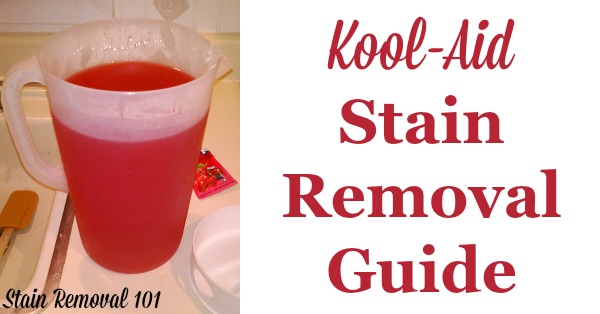

That is because Kool Aid contains dyes within it which make it bright and colorful, which is one of the things that makes it appetizing to kids and kids and heart, but those same dyes make the spots bright and hard to remove.
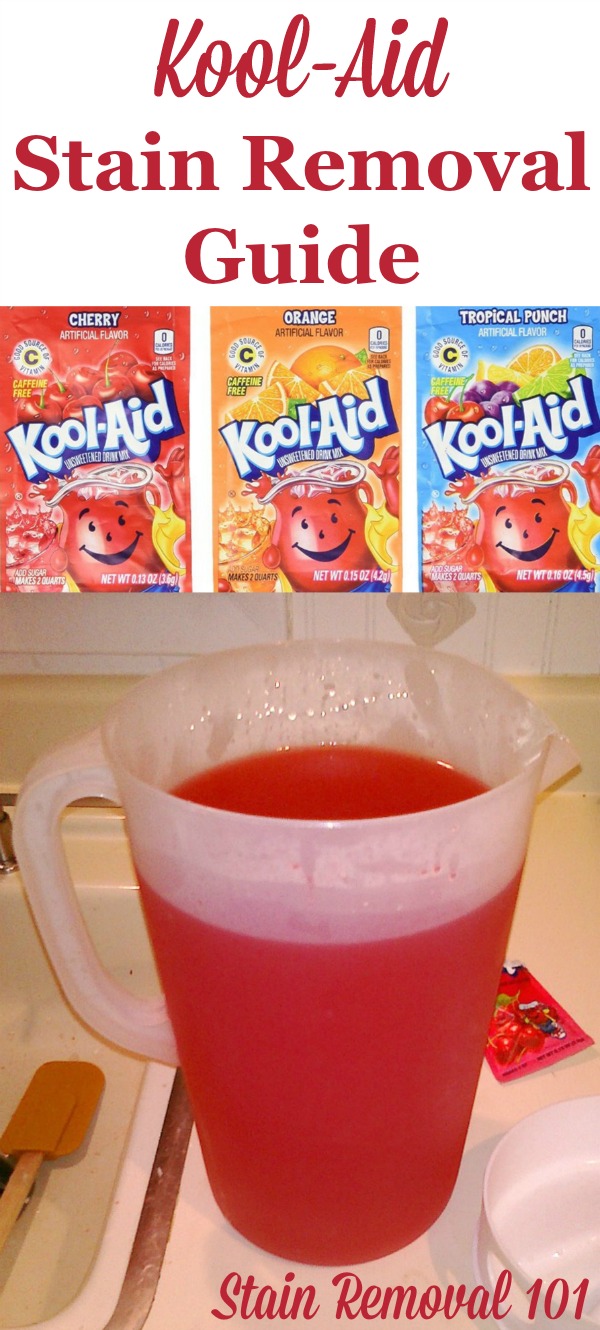

So the number one tip for Kool Aid stain removal is to act quickly once a spill occurs onto clothing, upholstery or carpet.
The type of Kool Aid that spilled will also impact how difficult it is to remove the stain, with (in my opinion) some of the worst staining culprits being red, grape, blue and orange Kool Aid.
The lemon and lime Kool Aid don't seem to stain as badly, at least I've found. (See below for a fun survey about what you believe is the worst staining flavor.)
Removing Kool Aid Stains From Clothing
Step 1: Pretreat the clothing or fabric with liquid laundry detergent (use heavy-duty detergent, not mild), coating the stain with the detergent. Then, let it sit for several minutes.
Step 2: Rinse off the detergent and stained area with cool (not warm or hot) water.
Step 3: If this has not removed the spot continue on to step 4. Otherwise, launder in the hottest water the fabric will allow to get out the stain, and either chlorine bleach if the fabric will allow it, or color safe bleach if not.
Hint: Make sure the stain is gone after washing, but before you place in the dryer or you may set it. Repeat if necessary.
Step 4: If the above method did not remove the stain, create a presoak solution to place the fabric in for at least 30 minutes, and possibly as long as overnight. This presoak solution should contain oxygen bleach and water.
Hint: More suggestions are contained in the article about removing food coloring stains.
Step 5: After presoaking, follow step 3 above and launder as directed.
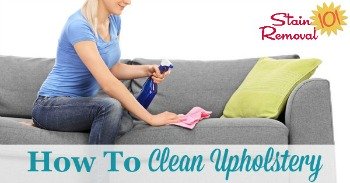
How To Remove Kool Aid Stains From Upholstery
Step 1: Mix a solution of two cups cool water, one tablespoon dishwashing liquid, and one tablespoon of white vinegar.
Step 2: Using this solution, sponge the stain from the Kool Aid with a clean white cloth.
Hint: For each of these stain removing solutions suggested be sure to get the upholstery only as wet as necessary to remove the stain from the Kool Aid.

Step 3: Next, blot at the stain until the liquid is absorbed.
Step 4: Repeat steps 2-3 until the stains are removed from the upholstery, or at least as much of the stain as possible.
Step 5: Now get plain cold water and a new white cloth and sponge the area to remove the cleaning solution, and then blot dry.
Step 6: If the spot is removed, stop. If not, next, sponge the stain with rubbing alcohol, blotting at the Kool Aid stain until as much of it comes off as possible.
Step 7: Now get plain cold water and a new white cloth and sponge the area to remove the rubbing alcohol, and then blot dry.
Step 8: If the spot is removed, stop. If not, next, mix a solution of two cups cool water, one tablespoon dishwashing liquid, and one tablespoon of ammonia.
Step 9: Using this solution, sponge the spot with a clean white cloth.
Hint: Ammonia can be harmful to some upholstery so be sure to spot test this solution in an inconspicuous area first to make sure you will not harm your upholstery.
Step 10: Sponge the upholstery with the ammonia solution, blotting until the stain is removed.
Step 11: Now get plain cold water and a new white cloth and sponge the area to remove the ammonia solution, and then blot dry.
You can get more information on how to clean upholstery here.
Removing Kool Aid Stains From Carpet
The instructions for removing Kool Aid stains from carpet is the same as for upholstery.
Of course, ammonia is not as harmful to carpets (usually) as it may be to upholstery. (That is unless you have a wool carpet, in which case ammonia will disintegrate the wool!)
If you have a synthetic carpet, and the stain from the Kool Aid is really stubborn try mixing a solution of 1 part ammonia to 1 part very hot water and using this to try to remove the stain.
Apply some of the solution to the carpet and then blot with a towel. To get the solution really hot you can also use an iron, by applying the iron to the towel covering the stain, but be careful not to burn or melt your carpet!
Some fibers contained in synthetic carpets have a low melting point, so test in an inconspicuous area first regarding both the ammonia and iron.
Hope all these tips help you in removing these spots.
Recommended Kool Aid Stain Removers
Perhaps you don't want to make your own stain remover, but instead want to use something designed for removing Kool Aid stains. The key is to find products which remove dye stains.
Here are some articles and reviews on this site which discuss various products that are designed to remove them:
 Oxydol Detergent + Presoaking |
 Oxiclean Free To Get Out Of Carpet |
 Mr. Clean Eraser For Removing From Counter |
 Removing From Upholstery With Oxygen Bleach |
You can also share your own stain remover reviews here for other removers that work on Kool Aid, or any other stain.
Submit Your Own Stain Removal Tip For Kool Aid
Do you have your own tip for removing Kool Aid stains? If so, submit your tip here.
Did You Know Kool Aid Can Also Help Remove Some Stains?
It may not seem intuitive, but some Kool Aid powder packets, specifically citrus flavored ones, can help remove stains and clean things in your home. It is not really the Kool Aid which does this though, but the citric acid contained within the powder, which gives it its citrusy sour taste. (Find out about all kinds of citric acid uses here for your home.)
Here is an article about using orange Kool Aid to remove dishwasher stains. In addition, a reader shared this homemade green glass shower door cleaner recipe which utilizes, amongst other things, a powdered lemonade packet.
If you use Kool Aid or other powdered drink mixes for cleaning anything in your home, please share your homemade cleaners recipe here, and tell me all about it.
Get Even More Stain And Spot Removal Help Here
Are you a stain magnet like me? If so, check out the A to Z Stain Removal Guide which gives directions for how to remove over 100 types of stains from all kinds of surfaces.
In addition, here are some other stain removal guide pages you may need!
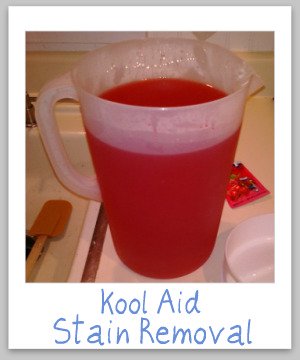
Photo of pitcher of Kool-Aid by jeffisageek
Thanks For Visiting My Website: Grab Your Free Gift!

Hi, I'm Taylor, a busy mom with 3 kids, so I have lots of hands on experience with house cleaning, laundry and my fair share of spots, spills and other messy catastrophes. Thanks for visiting my site.
I update the website all the time with tips, tutorials, cleaning recipes, reviews of products from readers like you, and tests I've done on various cleaners, removers and laundry supplies.
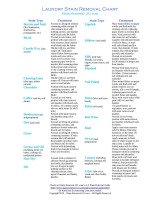
I'd love to give you a gift! When you subscribe to my free weekly newsletter you will receive a free printable laundry stain removal chart that you can reference as needed.
I hope you enjoy this gift, and stop by again soon!
Related Pages You May Enjoy
A-Z Guide: Instructions For Removing Over 100 Types Of Stains
Go From Removing Kool Aid Stains To Home Page
CAUTION: This website is provided for informational purposes only. It is provided as is, without warranties or guarantees. Some stains and messes just won't come out, and are permanent. Further, some cleaning methods can harm your item, so if what you want to clean or launder is sentimental or expensive call a professional. See disclaimer of liability for more information.
Popular Guide Pages
Let's Stay Connected!


Get Free Email Updates
(and get a FREE printable)
Related Pages
 Top 10 Tips For Removing Stains
 Tell Me About Your Favorite Products
 Visit Household Management 101
 Visit Home Storage Solutions 101