How To Remove Gasoline Stains
Gasoline stains can occur when either drips or spills of gas occur onto your clothes, upholstery or carpet.

One of the most important considerations when trying to get out these spots and spills is safety, because gasoline is, by its very nature, flammable.


Therefore, not only does the information below give you step by step instructions for gas stain removal, but also states what you should not do, to keep you safe.
In addition, it also focuses on removing the odor these drips and spills leave behind.
For any of the methods listed below it is essential that you do not use heat to remove the stain, such as placing the item in the dryer, until you know the item has all gasoline removed from it.
Gasoline Stain Removal From Denim And Other Clothing
Step 1: Place an absorbent, such as cornstarch or baking soda, onto the spot, and let it set for approximately half an hour, to absorb as much fuel as possible.
Step 2: After this time has elapsed scrape or brush off the absorbent, which has absorbed some of the fuel.
Hint: Depending on the amount of the gasoline spilled you may need to repeat this step until no more is absorbed by the baking soda or cornstarch.
Step 3: Pretreat the stain with a laundry prewash stain remover.
Step 4: Launder in the hottest water the fabric will allow to get out the stain.

Step 5: Let the clothing air dry while you confirm that the spot has been removed. If it has not, repeat steps 3-4 as needed.
Safety tip: Do not place the clothing into the dryer after washing, because it is difficult to determine while the clothing is wet if all the gas has been removed. If it is not this can pose a fire hazard because of the flammability of this fuel, so just air dry the clothing until you can confirm no gasoline remains.
In addition to a stain, often this causes a smell or odor on the clothing as well. You can read tips for removing both the stains and smells from fabric here.
How To Remove A Gas Stain From Upholstery
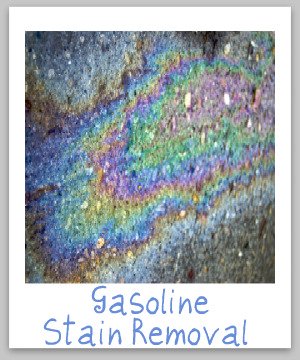
Step 1: Place an absorbent, such as cornstarch or baking soda, onto the gas spot, and let it set for approximately 15 minutes.
Step 2: Scrape or vacuum up the absorbent, which has absorbed some of the fuel.
Hint: Depending on the amount of the gasoline spilled you may need to repeat this step until no more is absorbed by the baking soda or cornstarch.
Step 3: For the gas still remaining take a clean white cloth and sponge the stain with a dry cleaning solvent.
Hint: First, be sure to test this solvent on an inconspicuous area of the upholstery to make sure it is safe.
Step 4: Next, blot at the stain until the solvent is absorbed.
Step 5: Repeat steps 3-4 until the stains are removed from the upholstery.
You can get more information on how to clean upholstery here.
Removing Gasoline Stains From Carpet
The instructions for removing stains from gasoline from carpet is the same as for upholstery.
Do You Have Any Tips To Share For Removing These Stains & Smells?
I'm always looking for more tips and ideas for how to remove stains. You can share your stain removal tip here, for removing spots caused by gas or anything else.
Get Even More Stain And Spot Removal Help Here
Are you a stain magnet like me? If so, check out the A to Z Stain Removal Guide which gives directions for how to remove over 100 types of stains from all kinds of surfaces.

Bottom photo by FeatheredTar
Thanks For Visiting My Website: Grab Your Free Gift!

Hi, I'm Taylor, a busy mom with 3 kids, so I have lots of hands on experience with house cleaning, laundry and my fair share of spots, spills and other messy catastrophes. Thanks for visiting my site.

I update the website all the time with tips, tutorials, cleaning recipes, reviews of products from readers like you, and tests I've done on various cleaners, removers and laundry supplies.
I'd love to give you a gift! When you subscribe to my free weekly newsletter you will receive a free printable laundry stain removal chart that you can reference as needed.
I hope you enjoy this gift, and stop by again soon!
Related Pages You May Enjoy
A-Z Guide: Instructions For Removing Over 100 Types Of Stains
Go From How To Remove Gasoline Stains To Home Page
CAUTION: This website is provided for informational purposes only. It is provided as is, without warranties or guarantees. Some stains and messes just won't come out, and are permanent. Further, some cleaning methods can harm your item, so if what you want to clean or launder is sentimental or expensive call a professional. See disclaimer of liability for more information.
Popular Guide Pages
Let's Stay Connected!


Get Free Email Updates
(and get a FREE printable)
Related Pages
 Top 10 Tips For Removing Stains


 Tell Me About Your Favorite Products


 Visit Household Management 101
 Visit Home Storage Solutions 101
Share Your Comments, Tips & Ideas